
Beyond Organic
In order to be labeled “organic”, vegetables, herbs and fruits must be grown in a soil-based environment using a plant or an animal-based fertilizer.
In other terms, with commercial organic farming, although free from pesticides and GMOs, the tomatoes, lettuce, and broccoli which you might find in stores are usually grown in a soil depleted from nutrients, which often times is enhanced with animal-based fertilizers derived from pigs, cows, horses, chickens, etc. Although we are in full support of organic farming, we deplore the fact that organic farmers are only compelled to use organic fertilizers, but are not under the obligation to tell customers whether such fertilizers are plant-based or animal-based.
Our vegetables, herbs and fruits have more nutrients than their counterparts grown in soil and we can prove it!
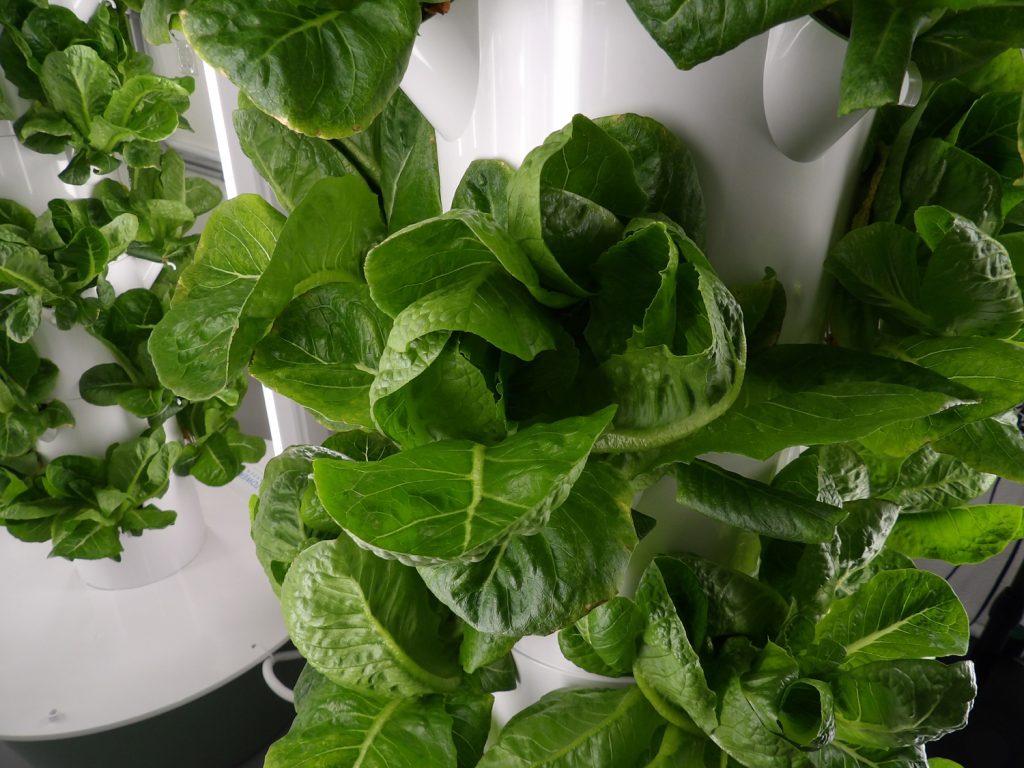
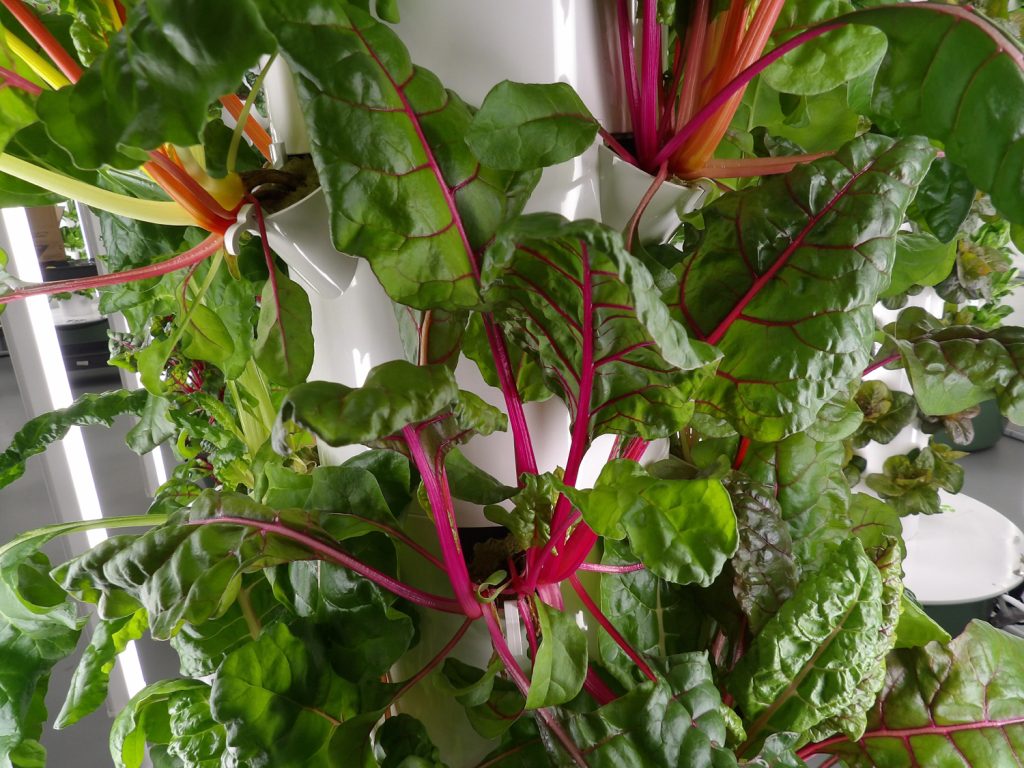
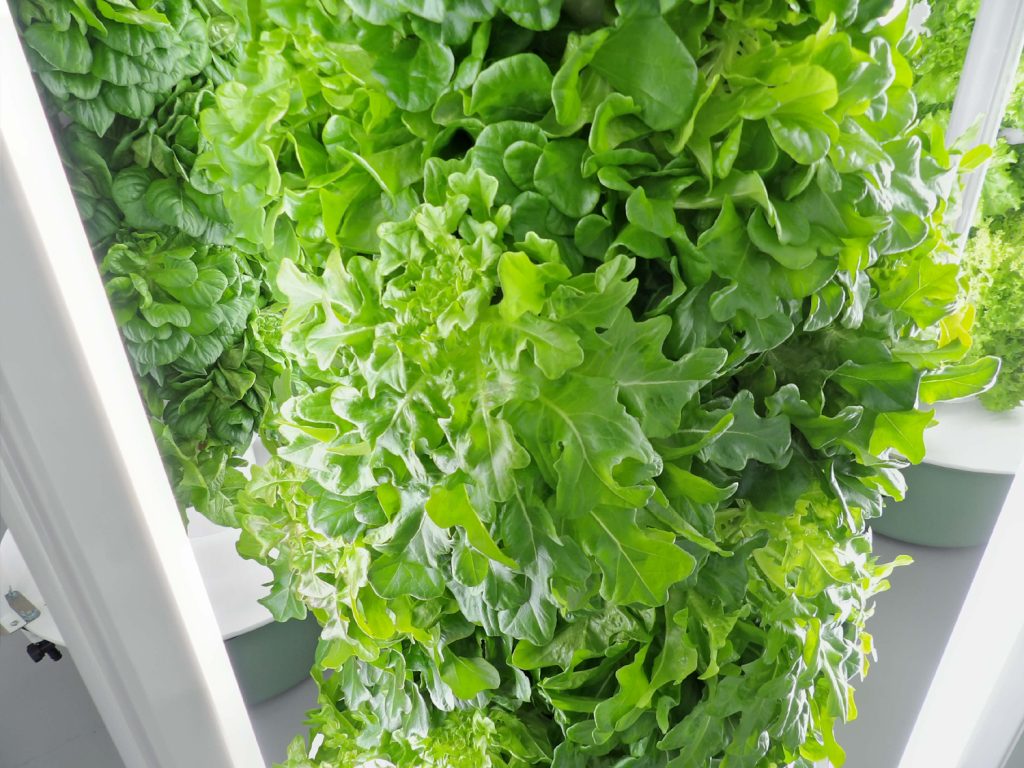


Only the purest earth minerals are used in our nutrient solution
Earth-based minerals
When farming with Tower Garden® aeroponic technology, we use a proprietary water soluble ionic mineral solution called “Aeroponic Power-Gro®”. Only the purest earth minerals are used thus allowing us to deliver all necessary & essential nutrients straight to the roots, resulting in a healthier plant growth and a superior crop yield. Furthermore, contrary to fertilizers used in conventional farming and gardening featuring ammoniacal nitrogen, Aeroponic Power-Gro® is made with nitrate nitrogen.

Earth-based minerals
When farming with Tower Garden® aeroponic technology, we use a proprietary water soluble ionic mineral solution called “Aeroponic Power-Gro®”. Only the purest earth minerals are used thus allowing us to deliver all necessary & essential nutrients straight to the roots, resulting in a healthier plant growth and a superior crop yield. Furthermore, contrary to fertilizers used in conventional farming and gardening featuring ammoniacal nitrogen, Aeroponic Power-Gro® is made with nitrate nitrogen.
No pesticides, no herbicides, no fungicides, no chemicals...
Abstract
A comparison of the product yield, total phenolics, total flavonoids, and antioxidant properties was done in different leafy vegetables/herbs (basil, chard, parsley, and red kale) and fruit crops (bell pepper, cherry tomatoes, cucumber, and squash) grown in aeroponic growing systems (AG) and in the field (FG). An average increase of about 19%, 8%, 65%, 21%, 53%, 35%, 7%, and 50% in the yield was recorded for basil, chard, red kale, parsley, bell pepper, cherry tomatoes, cucumber, and squash, respectively, when grown in aeroponic systems, compared to that grown in the soil. Antioxidant properties of AG and FG crops were evaluated using 2,2-diphenyl-1-picrylhydrazyl (DDPH) and cellular antioxidant (CAA) assays. In general, the study shows that the plants grown in the aeroponic system had a higher yield and comparable phenolics, flavonoids, and antioxidant properties as compared to those grown in the soil.
Introduction
Over the years, research on antioxidants, as potential therapeutic agents to prevent free radical generated damage in the human body, has gained popularity. Antioxidants of natural origin, compared to the synthetic antioxidants present in the market, have attracted considerable attention by consumers and by researchers since there is concern of synthetic antioxidants consumption due to their instability and possible activity as carcinogens [1–3]. In recent years, consumption of vegetables and fruits in the average diet has been highlighted for its contribution towards lowering the risks of several life-threatening diseases such as coronary heart disease, stroke, pulmonary disease, and different types of cancer [4–13]. The benefits are due to the presence of polyphenols, flavonoids, carotenoids, and vitamins [14–16]. Of these phytochemicals, polyphenols are largely recognized as anti-inflammatory, antiviral, antimicrobial, and antioxidant agents [14]. The concentrations of phenolic and other secondary metabolites in fruits and vegetables are influenced by many factors, including soil, irrigation, and climatic conditions. Soil cultivation of crops may also result in year-to-year variability in the composition of phytochemicals and in total yield [17]. Hence, there is an increased interest in hydroponic/aeroponic cultivation, which has several advantages over traditional soil cultivation including less contact with soil or dust (if grown outdoor). Therefore, there is less chance of contamination through pest and soil-borne pathogens [18, 19]. Furthermore, indoor hydroponic/aeroponic cultivation provides a better control on the quality of the produce in terms of secondary metabolites and crop yield through a complete control on the nutrient supply. Indoor cultivation carried out under the control and optimized environmental conditions can further maximize the yield of the product and also eliminate the problems linked to fluctuations in the outdoor weather conditions. In the present study, the attempt has been made to evaluate the difference, if any, in quality and quantity of produce between the crops grown in hydroponic/aeroponic systems and in soil.
Materials and Methods
Table 1 shows the comparison in the average crop yield per plant, average fruit weight, and average number of fruits per plant in different crops grown in aeroponic growing systems (AG) and in the field (FG). The average crop yield per plant (and total yield) was higher in the crops grown in aeroponic systems as compared to those grown in the field. An average increase of about 19%, 8%, 65%, and 21% in yield was recorded in basil, chard, red kale, and parsley (leafy vegetables) when grown in aeroponic systems. Similarly, an average increase of about 53%, 35%, 7%, and 50% in yield was recorded in bell pepper, cherry tomatoes, cucumber, and squash (fruit crops), respectively, when grown in aeroponic systems as compared to those plants grown in the soil. The average weight of the cucumbers was higher in field grown plants, whereas the average weight of squash and bell peppers was higher in the plants grown in aeroponic systems. A comparable average fruit weight (21.78 g in FG and 20.61 g in AG) was observed for cherry tomatoes grown in the two types of growing systems. On the other hand, the average number of fruit produced per plant was higher in all the fruit crops grown in the Tower Garden aeroponic systems as compared to those grown in soil.
3.2. Determination of Total Phenolic Content
Figure 1 shows the total phenolic content in the samples of different leafy vegetable and fruit crops grown in Tower Garden aeroponic systems and in the soil. Among the leafy vegetables, the highest phenolic content was found in chard (57.73 mg GAE/g dry wt., in FG and 53.45 GAE/g dry weight in AG) followed by basil, red kale, and parsley. Phenolic content was slightly higher in basil, chard, and parsley when grown in soil as compared to those grown in aeroponic systems, whereas phenolic content was slightly higher in aeroponically grown red kale as compared to those grown in the soil. The differences in phenolic content, however, were not found to be statistically significant for all the leafy vegetables (basil, LSD = 32.50, ; chard, LSD = 41.15, ; parsley, LSD = 18.00, ; red kale, LSD = 22.79, ) while grown in two types of cultivation systems. Similarly, differences in phenolic content in aeroponically and field grown fruit crops bell pepper (LSD = 11.10, ), cherry tomatoes (LSD = 13.51, ), cucumber (LSD = 8.86, ), and squash (LSD = 3.94, ) were also observed to be statistically insignificant. Leafy vegetables, in general, have shown higher phenolic content as compared to fruit crops irrespective of cultivation systems.
3.3. Determination of Flavonoids Content
The total flavonoids content in different crops grown in aeroponic systems and in the field are shown in Figure2. Among leafy vegetables, the highest amount of flavonoid content was found in parsley (14.35 mg quercetin acid equivalent (QE)/g dry wt. in FG and 13.00 QE/g dry weight in AG) followed by chard (11.08 mg QE/g dry wt. in FG and 12.41 QE/g dry wt. in AG), basil (12.27 mg QE/g in FG and 9.91 QE/g dry wt. in AG), and red kale (6.57 mg QE/g dry wt. in FG and 10.69 QE/g dry wt. in AG), whereas in fruit crops, the flavonoid content was the highest in bell pepper (4.11 mg QE/g dry wt. in FG and 3.70 QE/g dry wt. in AG) followed by cucumber, tomato, and squash. The differences in flavonoid content in aeroponic and field grown crops, basil (LSD = 8.35, ), chard (LSD = 11.19, ), parsley (LSD = 13.04, ), red kale (LSD = 9.63, ), bell pepper (LSD = 2.56, ), cherry tomatoes (LSD = 0.88, ), cucumber (LSD = 1.60,), and squash (LSD = 0.76, ) were observed to be statistically insignificant. Similar to phenolic content leafy vegetables had higher flavonoid content compared to fruit crops.
3.4. Determination of Antioxidant Activity
3.4.1. 2,2-Diphenyl-1-picrylhydrazyl (DPPH) Assay
Antioxidant properties of AG and FG crops using 2,2-diphenyl-1-picrylhydrazyl (DDPH) assay are shown in Figure 3. Among leafy vegetables, antioxidant activity in terms of radical scavenging activity, using DPPH assay, ranged between 63.88 and 28.80% in the field grown crops, whereas it ranged between 75.22 and 22.91% in the plants grown in aeroponic systems. The maximum antioxidant activity was observed in basil and the minimum in parsley among the leafy vegetables. In general, values of radical scavenging activity were lower in fruit crops as compared to those of leafy vegetables. Among the fruit crops, the activity ranged between 48.47 and 13.93% in field grown crops, whereas it ranged between 47.70 and 16.01% in the crops grown in aeroponic systems. The maximum activity was found in cherry tomatoes and the minimum activity was observed in squash among fruit crops. Radical scavenging activity of aeroponically grown crops was found comparable to those grown in the field. The minor differences in the radical scavenging activity between aeroponically grown crops and those grown in soil were, however, statistically insignificant (basil, LSD = 25.28; chard, LSD = 22.92; parsley, LSD = 8.69; red kale, LSD = 16.06; bell pepper, LSD = 17.15; cherry tomatoes, LSD = 12.65; cucumber, LSD = 5.51; squash, LSD = 6.63) ().
3.4.2. Cellular Antioxidant Assay (CAA)
Antioxidant activities of AG and FG crops using the cellular antioxidant assay (CAA) are shown in Figure 4. Similar to DPPH assay, the maximum antioxidant activity, among the leafy vegetables, was found in basil (69.18 CAA units in FG and 73.52 CAA units in AG) and minimum was in parsley (24.51 CAA units in FG and 23.33 CAA units in AG), whereas among fruit crops, maximum activity was in field grown cherry tomatoes (33.11 CAA units) and minimum in field grown squash (14.38 CAA units). Except for tomatoes and chard, all other crops had comparable antioxidant activity () as determined by CAA assay. The activity of tomatoes (LSD = 10.63, and LSD = 15.46, ) and chard (LSD = 6.37, and LSD = 9.05,) was higher in field grown plants as compared to those grown in aeroponic systems.
4. Discussion
Plants are potential sources of natural antioxidants. Fruits and vegetables in the diet have been shown in epidemiological studies to be protective against several chronic diseases associated with aging such as cancer, cardiovascular disease, cataracts, and brain and immune dysfunction [28–30]. These natural protective effects have been attributed to various components such as carotenoids, vitamins C and E, and phenolic and thiol (SH) compounds [31]. Many studies have focused on the biological activities of phenolics which are potent antioxidants and free radical scavengers [32–34]. The antioxidant activity of phenolics is mainly due to their redox properties, which allows them to act as reducing agents, hydrogen donors, and singlet oxygen quenchers [33, 35, 36]. The interest in phenolic compounds derived from vegetables and their roles in nutrition are therefore increasing [32, 37]. Phenolic compounds are also known to play an important role in stabilizing lipids against peroxidation and inhibiting various types of oxidizing enzymes [38, 39]. The differences in the flavonoid structures and their substitutions influence the phenoxyl radical stability, thereby affecting the antioxidant properties of the flavonoids [40]. In the present study, phenolics and flavonoid content of aeroponically grown crops were found to be comparable to those grown in the soil. The total product yield was, however, higher in aeroponically grown crops. In a similar study, Miller et al. (1989) [41] have reported a greater dry-matter accumulation in maize (Zea mays L.) on the hydroponic system than in well-fertilized, irrigated sandy-loam soil when planting pattern and density were the same. In another study, a significantly higher phenolic content in basil leaves has been reported by Sgherri et al. (2010) [42] while grown in hydroponics as compared to those grown in soil. The antioxidant capacity of fruits and vegetables can be tested using a wide variety of methods. In the present study, the antioxidant activity of the fresh produce was evaluated in terms of their free radical scavenging capacity by DPPH assay. Their activity against intracellular oxidative stress was determined by CAA assay. These assays have frequently been used by researchers to assess antioxidant capacity of different food products [43–45]. Our results show that the radical scavenging activity of aeroponically grown crops was highly comparable to those grown in the field. Sgherri et al. (2010), using similar methods, have reported an improved antioxidant activity of both aqueous and lipid extracts of basil leaves in hydroponic cultivation as compared to those grown in soil. The relationship between total phenolic content and antioxidant activity using DPPH assay and total flavonoid and antioxidant activity using cellular antioxidant assay in different crops grown in aeroponic systems and in the field is shown in Figures 5 and 6, respectively. Following DPPH assay, regression analysis shows that phenolic compounds contribute to about 75% (, ) and 61% (, ) of radical scavenging properties in the crops grown in field and in Tower Garden, respectively (Figure 5). Similarly, flavonoids contribute to about 30% (, ) and 32% (, ) of antioxidant activity in the crops grown in the field and in Tower Garden, respectively (Figure 6). Evidently, the rest of the proportion of antioxidant activity comes from nonphenolic compounds such as vitamins and carotenoids [46]. Phenolics and flavonoids, in general, constitute a major group of compounds, which act as primary antioxidants [47], and are known to react with hydroxyl radicals [48], superoxide anion radicals [49], and lipid peroxy radicals [50]. They are also known to protect DNA from oxidative damage, inhibit growth of tumor cells and possess anti-inflammatory and antimicrobial properties. Similarly, Yao et al. 2010 [51] reported a significant positive correlation between the antioxidant activity and the contents of total flavonoids and total phenolics in celery. The higher proportion of antioxidant activity of phenolic compounds in the species grown in aeroponic systems and in the soil in our study can be used as an accessible source of natural antioxidants. Our data suggests that in spite of a few variations, antioxidant activities of aeroponically grown crops were highly comparable to those grown in soil. Since concentrations of vitamins and phenolic compounds in the crop produce may be influenced by uneven distribution of nutrients in the soil, the hydroponic/aeroponic systems provide a higher level of reproducibility, which is a prerequisite if the product is being used in the food or nutraceutical industry.
Figure 6: Relationship between total flavonoid content and antioxidant activity of field grown (FG) and aeroponic grown (AG) plants by cellular antioxidant assay.
In conclusion, the study reveals that plants grown in aeroponic systems show a higher product yield and comparable antioxidant properties (using DPPH and cell-based assays) to those grown in the soil
Results
We sell our nutrients/fertilizers in bulk (1 nutrient set supplies 30 towers for 6 months/10 towers for 18 months). In other terms, such volume of nutrients would be overkill just for 2 towers. Our proprietary nutrient solution is key to our technology.
Furthermore, our Tower Farm systems are not “a novelty.” We have over 10 years of experience, and numerous Tower Farm references operating successfully in all climates including one similar to the one in the UAE. We are not in the ‘testing phase of development.’
In the world of aeroponic vertical farming, we are not only veterans, but also we were the pioneers of such technology over a decade ago. We are not one of these “Chinese-plastic-fantastic-cheap-tower” without references nor track record!
Our Tower Farm systems are being used by over 100,000+ customers and hundreds of profitable commercial Tower Farms worldwide.
This is why we feel that if someone truly wishes to test our aeroponic Tower Farm commercial systems, it should be done with a minimum of 10 towers. Any less could not lead to conclusive results to benchmarking the potential of our technology on the commercial level.
Acknowledgements and References
Suman Chandra, Shabana Khan, Bharathi Avula, et al., “Assessment of Total Phenolic and Flavonoid Content, Antioxidant Properties, and Yield of Aeroponically and Conventionally Grown Leafy Vegetables and Fruit Crops: A Comparative Study,” Evidence-Based Complementary and Alternative Medicine, vol. 2014, Article ID 253875, 9 pages, 2014. doi:10.1155/2014/253875
References
- S. M. Barlow, “Toxicological aspects of antioxidants used as food additives,” in Food Antioxidants, B. J. F. Hudson, Ed., pp. 253–307, Elsevier, Amsterdam, The Netherlands, 1990. View at Google Scholar
- M. Namiki, “Antioxidants/antimutagens in food,” Critical Reviews in Food Science and Nutrition, vol. 29, no. 4, pp. 273–300, 1990. View at Google Scholar · View at Scopus
- K. Ramalakshmi, I. R. Kubra, and L. J. M. Rao, “Antioxidant potential of low-grade coffee beans,” Food Research International, vol. 41, no. 1, pp. 96–103, 2008. View at Publisher · View at Google Scholar ·View at Scopus
- H. R. Frydoonfar, D. R. McGrath, and A. D. Spigelman, “The variable effect on proliferation of a colon cancer cell line by the citrus fruit flavonoid Naringenin,” Colorectal Disease, vol. 5, no. 2, pp. 149–152, 2003. View at Publisher · View at Google Scholar · View at Scopus
- F. Hakimuddin, G. Paliyath, and K. Meckling, “Selective cytotoxicity of a red grape wine flavonoid fraction against MCF-7 cells,” Breast Cancer Research and Treatment, vol. 85, no. 1, pp. 65–79, 2004.View at Publisher · View at Google Scholar · View at Scopus
- K. J. Joshipura, F. B. Hu, J. E. Manson et al., “The effect of fruit and vegetable intake on risk for coronary heart disease,” Annals of Internal Medicine, vol. 134, no. 12, pp. 1106–1114, 2001. View at Google Scholar · View at Scopus
- S. S. Khanzode, M. G. Muddeshwar, S. D. Khanzode, and G. N. Dakhale, “Antioxidant enzymes and lipid peroxidation in different stages of breast cancer,” Free Radical Research, vol. 38, no. 1, pp. 81–85, 2004. View at Publisher · View at Google Scholar · View at Scopus
- S. C. Larsson, L. Holmberg, and A. Wolk, “Fruit and vegetable consumption in relation to ovarian cancer incidence: the Swedish mammography cohort,” The British Journal of Cancer, vol. 90, no. 11, pp. 2167–2170, 2004. View at Google Scholar · View at Scopus
- Y. Liu, T. Sobue, T. Otani, and S. Tsugane, “Vegetables, fruit consumption and risk of lung cancer among middle-aged Japanese men and women: JPHC study,” Cancer Causes and Control, vol. 15, no. 4, pp. 349–357, 2004. View at Publisher · View at Google Scholar · View at Scopus
- M. L. McCullough, A. S. Robertson, A. Chao et al., “A prospective study of whole grains, fruits, vegetables and colon cancer risk,” Cancer Causes and Control, vol. 14, no. 10, pp. 959–970, 2003. View at Publisher · View at Google Scholar · View at Scopus
- M. C. Polidori, “Antioxidant micronutrients in the prevention of age-related diseases,” Journal of Postgraduate Medicine, vol. 49, no. 3, pp. 229–235, 2003. View at Google Scholar · View at Scopus
- K. S. Reddy and M. B. Katan, “Diet, nutrition and the prevention of hypertension and cardiovascular diseases,” Public Health Nutrition, vol. 7, no. 1, pp. 167–186, 2004. View at Publisher · View at Google Scholar · View at Scopus
- Z. Vokó, M. Hollander, A. Hofman, P. J. Koudstaal, and M. M. B. Breteler, “Dietary antioxidants and the risk of ischemic stroke: the Rotterdam study,” Neurology, vol. 61, no. 9, pp. 1273–1275, 2003. View at Google Scholar · View at Scopus
- K. A. Steinmetz and J. D. Potter, “Vegetables, fruit, and cancer prevention: a review,” Journal of the American Dietetic Association, vol. 96, no. 10, pp. 1027–1039, 1996. View at Publisher · View at Google Scholar · View at Scopus
- A. Scalbert and G. Williamson, “Dietary intake and bioavailability of polyphenols,” Journal of Nutrition, vol. 130, no. 8, pp. 2073–2085, 2000. View at Google Scholar · View at Scopus
- W. C. Willett, “Balancing life-style and genomics research for disease prevention,” Science, vol. 296, no. 5568, pp. 695–698, 2002. View at Publisher · View at Google Scholar · View at Scopus
- F. Bourgaud, A. Gravot, S. Milesi, and E. Gontier, “Production of plant secondary metabolites: a historical perspective,” Plant Science, vol. 161, no. 5, pp. 839–851, 2001. View at Publisher · View at Google Scholar · View at Scopus
- A. Pardossi, F. Malorgio, L. Incrocci, and F. Tognoni, “Hydroponic technologies for greenhouse crops,” in Crops: Quality, Growth and Biotechnology, R. Dris, Ed., pp. 360–378, WFL Publisher, Helsinki, Finland, 2006. View at Google Scholar
- K. Claudia, M. Rita, and P. Alberto, “Influence of nitrogen nutrition on growth and accumulation of rosmarinic acid in sweet basil (Ocimum besilicum L.) grown in hydroponic culture,” Australian Journal of Crop Science, vol. 7, no. 3, pp. 321–327, 2013. View at Google Scholar
- V. L. Singleton and J. A. Rossi, “Colorimetry of total phenolics with phosphomolybdic-phosphotungstic acid reagents,” The American Journal of Enology and Viticulture, vol. 16, pp. 144–158, 1965. View at Google Scholar
- D. Marinova, F. Ribarova, and M. Atanassova, “Total phenolic and total flavonoids in Bulgarian fruits and vegetables,” Journal of the University of Chemical Technology and Metallurgy, vol. 40, no. 3, pp. 255–260, 2005. View at Google Scholar
- C. Chang, M. Yang, H. Wen, and J. Chern, “Estimation of total flavonoid content in propolis by two complementary colometric methods,” Journal of Food and Drug Analysis, vol. 10, no. 3, pp. 178–182, 2002. View at Google Scholar · View at Scopus
- F. Pourmorad, S. J. Hosseinimehr, and N. Shahabimajd, “Antioxidant activity, phenol and flavonoid contents of some selected Iranian medicinal plants,” African Journal of Biotechnology, vol. 5, no. 11, pp. 1142–1145, 2006. View at Google Scholar · View at Scopus
- G. Miliauskas, P. R. Venskutonis, and T. A. van Beek, “Screening of radical scavenging activity of some medicinal and aromatic plant extracts,” Food Chemistry, vol. 85, no. 2, pp. 231–237, 2004. View at Publisher · View at Google Scholar · View at Scopus
- Z. Cheng, J. Moore, and L. Yu, “High-throughput relative DPPH radical scavenging capacity assay,”Journal of Agricultural and Food Chemistry, vol. 54, no. 20, pp. 7429–7436, 2006. View at Publisher ·View at Google Scholar · View at Scopus
- K. L. Wolfe and H. L. Rui, “Cellular antioxidant activity (CAA) assay for assessing antioxidants, foods, and dietary supplements,” Journal of Agricultural and Food Chemistry, vol. 55, no. 22, pp. 8896–8907, 2007. View at Publisher · View at Google Scholar · View at Scopus
- R-Development-Core-Team, R: A Language and Environment for Statistical Computing, R Foundation for Statistical Computing, Vienna, Austria, 2005.
- B. N. Ames, M. K. Shigenaga, and T. M. Hagen, “Oxidants, antioxidants, and the degenerative diseases of aging,” Proceedings of the National Academy of Sciences of the United States of America, vol. 90, no. 17, pp. 7915–7922, 1993. View at Google Scholar · View at Scopus
- G. Block, B. Patterson, and A. Subar, “Fruit, vegetables, and cancer prevention: a review of the epidemiological evidence,” Nutrition and Cancer, vol. 18, no. 1, pp. 1–29, 1992. View at Google Scholar ·View at Scopus
- J. A. Vinson, J. Jang, Y. A. Dabbagh, M. M. Serry, and S. Cai, “Plant polyphenols exhibit lipoprotein-bound antioxidant activity using an in vitro oxidation model for heart disease,” Journal of Agricultural and Food Chemistry, vol. 43, no. 11, pp. 2798–2799, 1995. View at Google Scholar · View at Scopus
- G. Paganga, N. Miller, and C. A. Rice-Evans, “The polyphenolic content of fruit and vegetables and their antioxidant activities. What does a serving constitute?” Free Radical Research, vol. 30, no. 2, pp. 153–162, 1999. View at Google Scholar · View at Scopus
- M. P. Kähkönen, A. I. Hopia, H. J. Vuorela et al., “Antioxidant activity of plant extracts containing phenolic compounds,” Journal of Agricultural and Food Chemistry, vol. 47, no. 10, pp. 3954–3962, 1999.View at Publisher · View at Google Scholar · View at Scopus
- C. A. Rice-Evans, N. J. Miller, P. G. Bolwell, P. M. Bramley, and J. B. Pridham, “The relative antioxidant activities of plant-derived polyphenolic flavonoids,” Free Radical Research, vol. 22, no. 4, pp. 375–383, 1995. View at Google Scholar · View at Scopus
- N. Sugihara, T. Arakawa, M. Ohnishi, and K. Furuno, “Anti- and pro-oxidative effects of flavonoids on metal-induced lipid hydroperoxide-dependent lipid peroxidation in cultured hepatocytes loaded with α-linolenic acid,” Free Radical Biology and Medicine, vol. 27, no. 11-12, pp. 1313–1323, 1999. View at Publisher · View at Google Scholar · View at Scopus
- C. A. Rice-Evans, N. J. Miller, and G. Paganga, “Structure-antioxidant activity relationships of flavonoids and phenolic acids,” Free Radical Biology and Medicine, vol. 20, no. 7, pp. 933–956, 1996.View at Publisher · View at Google Scholar · View at Scopus
- N. Ramarathnam, H. Ochi, and M. Takeuchi, “Antioxidant defense system in vegetable extracts,” inNatural Antioxidants, Chemistry, Health Effects and Applications, F. Shahidi, Ed., pp. 76–87, AOCS Press, Champaign, Ill, USA, 1997. View at Google Scholar
- H. Tapiero, K. D. Tew, G. N. Ba, and G. Mathé, “Polyphenols: do they play a role in the prevention of human pathologies?” Biomedicine and Pharmacotherapy, vol. 56, no. 4, pp. 200–207, 2002. View at Publisher · View at Google Scholar · View at Scopus
- M. J. Laughton, P. J. Evans, M. A. Moroney, J. R. S. Hoult, and B. Halliwell, “Inhibition of mammalian 5-lipoxygenase and cyclo-oxygenase by flavonoids and phenolic dietary additives. Relationship to antioxidant activity and to iron ion-reducing ability,” Biochemical Pharmacology, vol. 42, no. 9, pp. 1673–1681, 1991. View at Publisher · View at Google Scholar · View at Scopus
- P. Cos, L. Ying, M. Calomme et al., “Structure-activity relationship and classification of flavonoids as inhibitors of xanthine oxidase and superoxide scavengers,” Journal of Natural Products, vol. 61, no. 1, pp. 71–76, 1998. View at Publisher · View at Google Scholar · View at Scopus
- A. Wojdyło, J. Oszmiański, and R. Czemerys, “Antioxidant activity and phenolic compounds in 32 selected herbs,” Food Chemistry, vol. 105, no. 3, pp. 940–949, 2007. View at Publisher · View at Google Scholar · View at Scopus
- M. H. Miller, G. K. Walker, M. Tollenaar, and K. G. Alexander, “Growth and yield of maize (Zea maysL.) grown outdoors hydroponically and in soil,” Canadian Journal of Soil Science, vol. 69, no. 2, pp. 295–302, 1989. View at Publisher · View at Google Scholar
- C. Sgherri, S. Cecconami, C. Pinzino, F. Navari-Izzo, and R. Izzo, “Levels of antioxidants and nutraceuticals in basil grown in hydroponics and soil,” Food Chemistry, vol. 123, no. 2, pp. 416–422, 2010. View at Publisher · View at Google Scholar · View at Scopus
- N. Deepa, C. Kaur, B. Singh, and H. C. Kapoor, “Antioxidant activity in some red sweet pepper cultivars,” Journal of Food Composition and Analysis, vol. 19, no. 6-7, pp. 572–578, 2006. View at Publisher · View at Google Scholar · View at Scopus
- U. Imeh and S. Khokhar, “Distribution of conjugated and free phenols in fruits: antioxidant activity and cultivar variations,” Journal of Agricultural and Food Chemistry, vol. 50, no. 22, pp. 6301–6306, 2002.View at Publisher · View at Google Scholar · View at Scopus
- B. Ou, D. Huang, M. Hampsch-Woodill, J. A. Flanagan, and E. K. Deemer, “Analysis of antioxidant activities of common vegetables employing oxygen radical absorbance capacity (ORAC) and ferric reducing antioxidant power (FRAP) assays: a comparative study,” Journal of Agricultural and Food Chemistry, vol. 50, no. 11, pp. 3122–3128, 2002. View at Publisher · View at Google Scholar · View at Scopus
- S. Rawat, I. D. Bhatt, and R. S. Rawal, “Total phenolic compounds and antioxidant potential ofHedychium spicatum Buch. Ham. ex D. Don in west Himalaya, India,” Journal of Food Composition and Analysis, vol. 24, no. 4-5, pp. 574–579, 2011. View at Publisher · View at Google Scholar · View at Scopus
- S. A. Adesegun, A. Fajana, C. I. Orabueze, and H. A. B. Coker, “Evaluation of antioxidant properties ofPhaulopsis fascisepala C.B.Cl. (Acanthaceae),” Evidence-Based Complementary and Alternative Medicine, vol. 6, no. 2, pp. 227–231, 2009. View at Publisher · View at Google Scholar · View at Scopus
- S. R. Husain, J. Cillard, and P. Cillard, “Hydroxyl radical scavenging activity of flavonoids,”Phytochemistry, vol. 26, no. 9, pp. 2489–2491, 1987. View at Google Scholar · View at Scopus
- I. B. Afanas’ev, A. I. Dorozhko, A. V. Brodskii, V. A. Kostyuk, and A. I. Potapovitch, “Chelating and free radical scavenging mechanisms of inhibitory action of rutin and quercetin in lipid peroxidation,”Biochemical Pharmacology, vol. 38, no. 11, pp. 1763–1769, 1989. View at Google Scholar · View at Scopus
- J. Torel, J. Cillard, and P. Cillard, “Antioxidant activity of flavonoids and reactivity with peroxy radical,”Phytochemistry, vol. 25, no. 2, pp. 383–385, 1986. View at Google Scholar · View at Scopus
- Y. Yao, W. Sang, M. Zhou, and G. Ren, “Phenolic composition and antioxidant activities of 11 celery cultivars,” Journal of Food Science, vol. 75, no. 1, pp. C9–C13, 2010. View at Publisher · View at Google Scholar · View at Scopus